
5 Powerful Ways to Get Your First Photography Client (Even If You’re Just Starting)
Starting a photography business can feel exciting—but also intimidating. Many aspiring photographers buy their first camera, learn how to shoot, and begin editing photos, only to realize they have no idea how to find their first paying client.
This is one of the most common challenges beginners face. You may have the passion, the equipment, and even the skills, but without clients, it’s difficult to turn photography into a real business.
The good news is this: every professional photographer started exactly where you are today.
In this guide, we’ll walk through five powerful and practical ways to land your first photography client, even if you have no portfolio, no reputation, and no advertising budget. These strategies are simple, proven, and extremely effective for beginners.
If you’re serious about turning your camera into a source of income, these methods will help you get started.
Start With Your Inner Circle
The fastest and easiest way to get your first photography client is to begin with people you already know.
When most photographers start out, they immediately think they need strangers or large clients to hire them. But the truth is that your first opportunities are often closer than you think.
Your friends, family members, classmates, coworkers, and acquaintances are the people who already trust you. That trust makes it much easier for them to give you your first opportunity.
When I started my photography journey, I didn’t have a fancy camera or a big network. In fact, I used my brother-in-law’s camera to begin experimenting with photography. I would take the camera with me to college and offer to take photos of my friends.
At that stage, I wasn’t charging anyone. I was simply practicing, learning how to shoot, and editing the photos afterward.
Something interesting happened next.
My friends started posting those photos on social media and tagging me. Suddenly, more people began seeing my work.
Soon after, someone reached out and asked if I could shoot photos for them—and they were willing to pay.
That was my first paying client.
This is how many photography careers begin.
If you’re just starting out, reach out to people in your circle and offer to photograph them.
For example:
- Offer a portrait shoot for a friend
- Photograph a family gathering
- Take photos at a birthday party
- Shoot graduation photos for classmates
Even if you do the first few shoots for free or for a very small fee, treat every session as if you are already a professional photographer.
Deliver high-quality work. Edit the photos properly. Communicate clearly.
When people see that you take your craft seriously, they will recommend you to others.
Word-of-mouth referrals are often the first engine of growth for a photography business.
Build Your Portfolio Through Collaboration
One of the biggest obstacles beginner photographers face is the portfolio problem.
Clients want to see your previous work before hiring you. But when you’re new, you don’t have any professional work to show yet.
This can feel like a frustrating cycle.
Clients want a portfolio before hiring you, but you need clients to build a portfolio.
The solution is simple: collaborative shoots.
Collaborations allow you to build professional-quality work while helping others at the same time.
Start by reaching out to people who also need strong visuals for their brand or personal projects.
For example:
- Fashion designers
- Makeup artists
- Hair stylists
- Models
- Local businesses
- Entrepreneurs
- Influencers
- Artists
Offer to collaborate on a photoshoot where both sides benefit.
For example:
- The model gets professional images for their portfolio.
- The makeup artist gets photos of their work.
- The business owner gets content for social media.
- You get strong photos to showcase in your portfolio.
This type of arrangement is commonly known as TFP (Time for Photos) or collaborative shooting.
The key is to treat these shoots professionally.
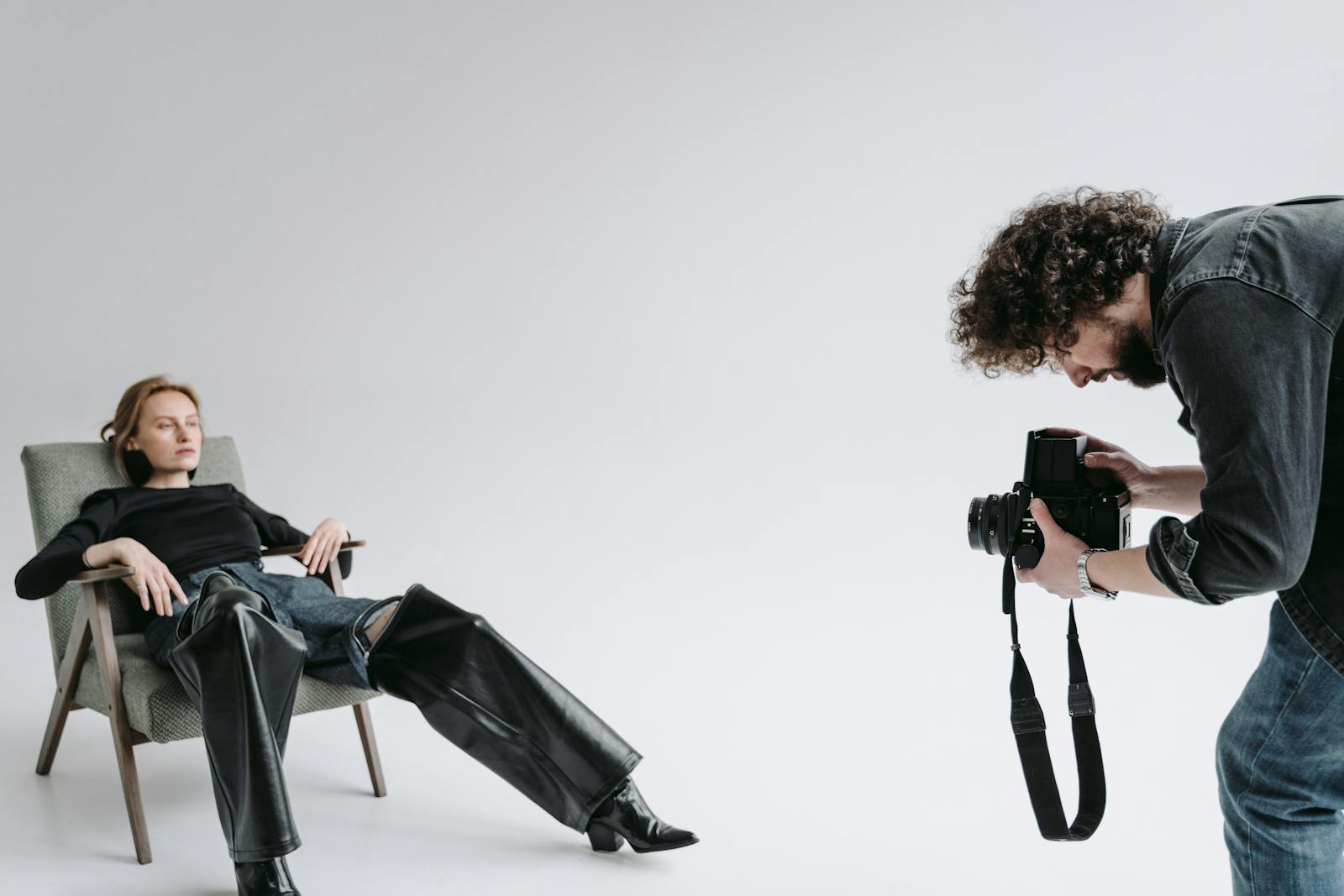
Plan the shoot carefully. Think about locations, lighting, styling, and concepts. When you deliver the final images, make sure they are polished and professionally edited.
The goal of these shoots is not just to practice photography. The goal is to create work that looks like it came from a professional assignment.
Once you have a handful of strong images, you can start presenting yourself as a photographer with a real portfolio.
And when potential clients see polished work, they are far more likely to trust you with paid projects.
Use Free Local Platforms to Get Discovered
Many photographers believe they need expensive advertising to attract clients.
But in reality, there are several free platforms that can bring you your first clients if used correctly.
One of the most powerful tools is Google Business Profile (formerly Google My Business).
Creating a Google Business profile is completely free and allows your photography business to appear in local search results.
For example, when someone searches for:
“photographer near me”
or
“wedding photographer in Mumbai”
Google shows local businesses first.
If your profile is optimized properly, your photography business can appear in those results.
To set up your profile effectively, make sure you include:
- Your best photos
- Your contact information
- Your working hours
- A clear description of your services
Once your profile is live, ask friends and early clients to leave a review. Reviews play a huge role in building credibility.
Even a few positive reviews can significantly improve your visibility in local search results.
Another powerful place to find clients is Facebook groups.
Many cities and communities have active Facebook groups where people frequently ask questions like:
- “Looking for a photographer for my event”
- “Anyone know a good portrait photographer?”
- “Need a photographer for a small business shoot”
Join local groups related to your city or niche. Instead of spamming your services, focus on engaging in conversations and offering helpful advice.
When people see you participating and providing value, they begin to recognize your name.
Over time, you become the person they think of when they need a photographer.
Instagram and LinkedIn can also help you gain visibility, especially when you use location-based hashtags.
Examples include:
- #MumbaiPhotographer
- #DelhiWeddingPhotographer
- #GoaPortraitPhotography
Tagging your location helps potential clients discover your work when searching for photographers in their area.
Consistency matters here.
Don’t just post photos. Share behind-the-scenes content, tips, stories, and experiences from your shoots.
This builds connection and trust with your audience.
Collaborate With People Who Already Have an Audience
One of the fastest ways to grow your visibility as a photographer is to work with people who already have an audience.
These can include:
- Influencers
- Models
- Content creators
- Entrepreneurs
- Local public figures
- Social media personalities
These individuals often need high-quality photos for their brand or social media content.
You can approach them with a simple offer: provide a professional photoshoot in exchange for photo credits and social media tags.
But here’s the important part.
When you do these shoots, don’t treat them casually.
Approach the shoot with full effort.
Plan the concept. Choose strong locations. Think about lighting, styling, and storytelling.
Then edit the photos carefully and deliver high-quality images.
When the influencer or creator posts these photos and tags you, your work is suddenly visible to hundreds or even thousands of people.
This kind of exposure can generate:
- New followers
- Direct messages
- Collaboration requests
- Paid bookings
In my own photography journey, several of my paid shoots came directly from collaborations like this.
One well-executed collaboration can introduce your work to an entirely new audience.
This is one of the most powerful forms of organic marketing for photographers.
Network at Events and Be Visible
Sometimes the simplest strategy is the most effective: show up where people are.
Events are full of potential clients.
These could include:
- Weddings
- Birthday parties
- College festivals
- Business meetups
- Fashion shows
- Exhibitions
- Networking events
- Community gatherings
When you attend events, bring your camera with you.
Introduce yourself to people and let them know you’re a photographer.
Offer to take a few candid photos or portraits during the event. People love receiving good photos, especially when they weren’t expecting them.
This creates a natural opportunity to start conversations and build relationships.
One important tip: make it easy for people to connect with you.
Traditional business cards are often lost or forgotten.
Instead, use modern alternatives like:
- Asking people to save your phone number directly
- Sharing your Instagram profile
- Using a QR code that links to your portfolio
This removes friction and increases the chances that people will actually follow up.
I have personally booked several photography assignments simply by being present at the right event and interacting with people.
When someone sees you working with a camera and interacting confidently, it builds immediate trust.
People tend to hire photographers they have already seen in action.
A Bonus Tip: Avoid Doing Too Many Free Shoots
Free shoots can be useful at the beginning of your photography journey, especially for building a portfolio and gaining experience.
However, it’s important not to stay stuck in that stage for too long.
After you complete a few collaborative shoots and build a strong portfolio, start transitioning toward paid work.
Free shoots should serve a clear purpose:
- Building your portfolio
- Collaborating with strategic partners
- Gaining visibility
But once your work begins attracting interest, start setting boundaries and charging for your services.
Your time, skills, and creativity have real value.
Charging for your work also helps clients take your services more seriously.
Your First Client Is Closer Than You Think
Starting a photography career may feel overwhelming, but the truth is that your first client is often closer than you imagine.
You don’t need expensive equipment, a large studio, or a huge advertising budget to begin.
What you need is action and consistency.
Start with people you know.
Build your portfolio through collaborations.
Use free platforms to increase visibility.
Partner with people who already have an audience.
Show up at events and connect with others.
These strategies have helped countless photographers launch their careers, and they can work for you too.
The key is to start where you are and keep moving forward.
Every professional photographer once had their first shoot, their first portfolio image, and their first paying client.
Yours is waiting for you.
So don’t overthink it.
Pick up your camera, start creating, and take the first step.
Your photography journey begins today.








Leave A Comment